Juicer Comparison · Last updated September 2026
Nama J2 vs Kuvings REVO830: What's the Difference?
Both are 50 RPM cold press juicers, but their feeding systems are fundamentally different. The Nama J2 centers the workflow around a self-feeding hopper, while the Kuvings REVO830 uses a Dual Feed Chute. That makes this comparison especially useful if you're deciding between batch-style loading and more direct ingredient feeding.
Some links on this page are affiliate links. Affiliate disclosure.
This comparison is based on current manufacturer specifications, documented product features, feed-system design and intended workflow. We have not performed standardized side-by-side yield, cleaning, noise or celery tests. How we review juicers.
The two juicers
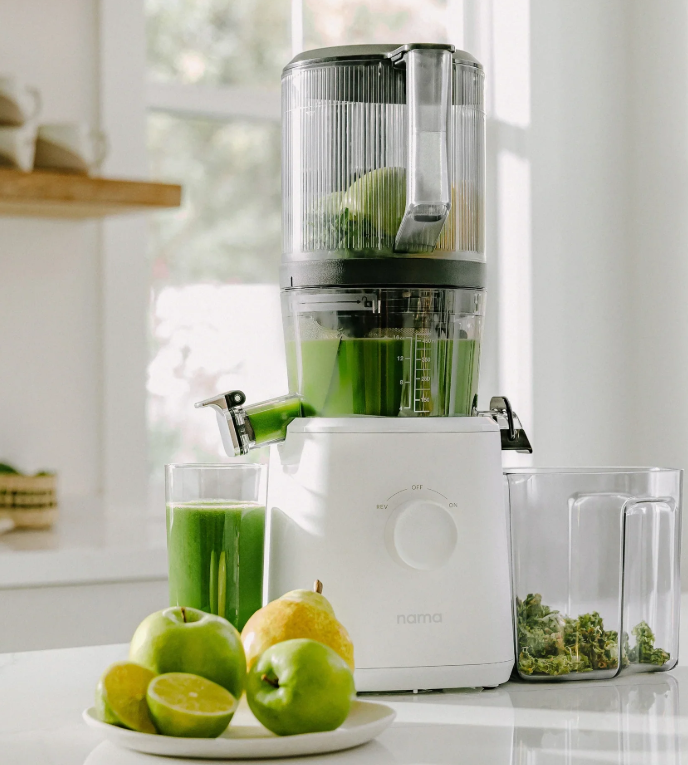
Nama J2
- 200W
- 50 RPM
- Self-feeding hopper
- 9.8 × 9.0 × 17.7 in
- 12.1 lb
- 15-year warranty
Save 10% with code MOH10
Check Price at NamaRead J2 Review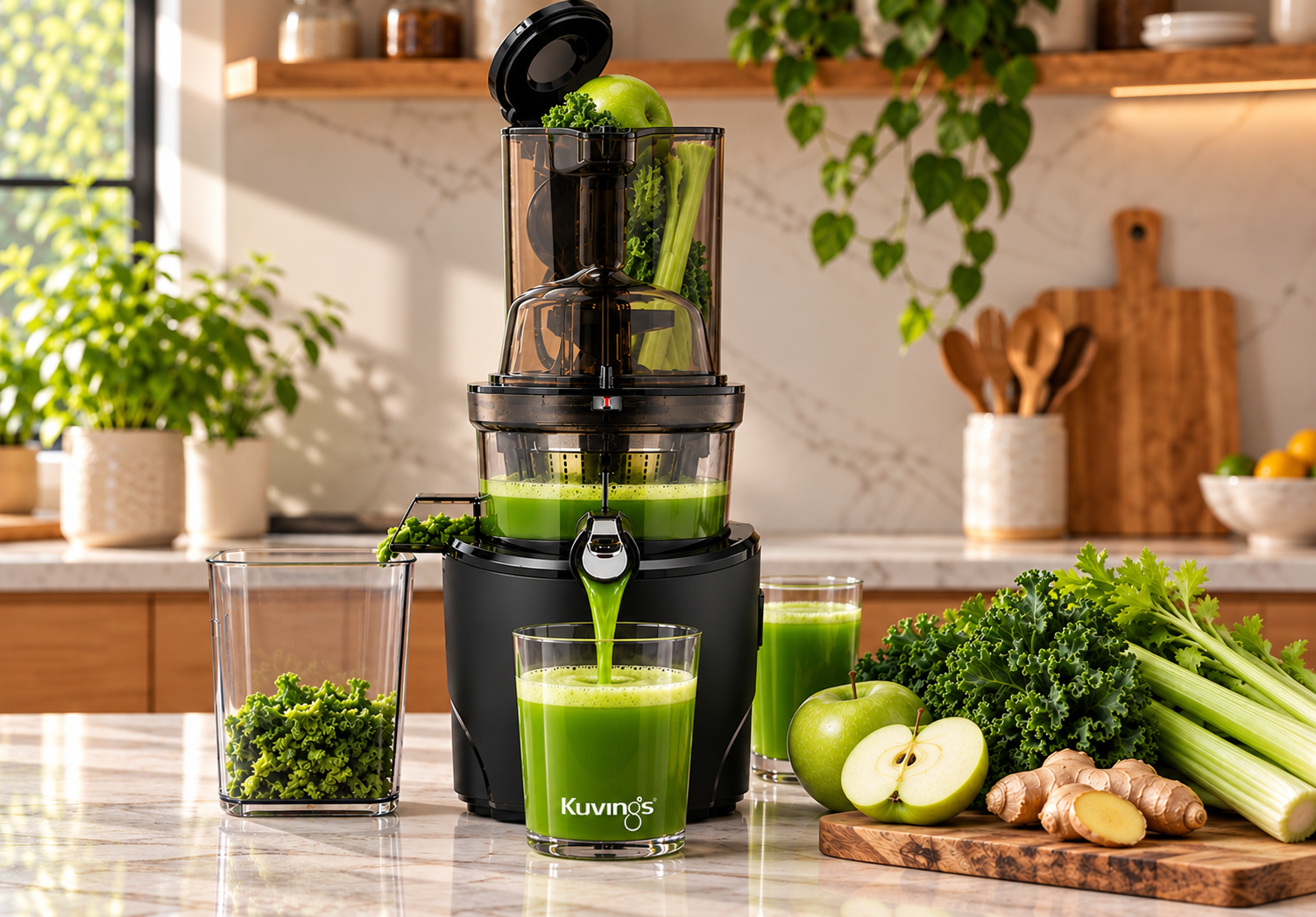
Kuvings REVO830
- 240W
- 50 RPM
- Dual Feed Chute
- Dedicated long-produce feeding approach
Nama J2 vs Kuvings REVO830: The Short Answer
The biggest difference isn't RPM — both run at 50 RPM. The J2 is about loading ingredients into a self-feeding hopper and letting the machine progressively process them. The REVO830 is about more direct ingredient feeding through its Dual Feed Chute, including a feeding approach intended for long produce.
Consider the Nama J2 if:
- You prefer self-feeding, batch-style loading
- You frequently make mixed juices
- You want verified dimensions and weight before buying
- A 15-year warranty matters to you
- You prefer the Nama ecosystem
- You can use MOH10 for 10% off
Consider the Kuvings REVO830 if:
- You prefer more direct control over ingredient feeding
- You regularly juice long produce
- Celery, carrots or cucumber are common ingredients
- The Dual Feed Chute appeals to your workflow
- You prefer Kuvings' feed design
Nama J2 vs Kuvings REVO830 Comparison
| Feature | Nama J2 | Kuvings REVO830 |
|---|---|---|
| Type | Cold press / slow juicer | Cold press / slow juicer |
| Power | 200W | 240W |
| Speed | 50 RPM | 50 RPM |
| Feeding | Self-feeding hopper | Dual Feed Chute |
| Long produce | Hopper preparation workflow | Dedicated long-produce feeding approach |
| Dimensions | 9.8 × 9.0 × 17.7 in | Not currently verified |
| Weight | 12.1 lb | Not currently verified |
| Warranty | 15 years | See Kuvings' current terms |
| Main workflow | Self-feeding / batch-style | More direct ingredient feeding |
| Nama discount | 10% with MOH10 | — |
Specifications are based on current manufacturer information and may change.
Self-Feeding Hopper vs Dual Feed Chute
This is the heart of the comparison: the two machines take different approaches to getting produce to the auger.
Nama J2 Self-Feeding Hopper
You load appropriately prepared ingredients into the hopper, and the machine progressively feeds them into the juicing mechanism. That reduces the need to keep pushing every individual ingredient through by hand. Some preparation is still part of the routine. The approach suits mixed recipes combining ingredients such as:
- Apples
- Cucumber
- Carrots
- Celery
- Ginger
- Leafy greens
Kuvings REVO830 Dual Feed Chute
The REVO830 takes a different approach. Its Dual Feed Chute provides different feeding options for different ingredient shapes, and its long-produce feeding approach is particularly relevant to ingredients such as celery, carrots and cucumber. Some preparation may still be needed depending on the produce. See our full REVO830 review for how the chute is designed.
200W vs 240W: Does the REVO830's Extra Wattage Matter?
200W
240W
The REVO830 has the higher rated wattage, but that alone does not establish:
- Higher juice yield
- Better juice quality
- Better nutrient retention
- Less clogging
- Faster processing
Motor design, auger geometry, chamber design, feeding and ingredients all matter.
Both Run at 50 RPM
Both machines are rated at 50 RPM — another reason not to choose between them on headline speed alone. Their more meaningful difference is how produce enters the machine.
Nama J2 vs Kuvings REVO830 for Celery
Celery has long stalks, a fibrous texture and a stringy structure, so the way it's fed into a juicer shapes the whole routine.
Nama J2 approach
Celery can be appropriately prepared and loaded into the self-feeding hopper, including as part of mixed recipes.
REVO830 approach
Its long-produce feeding design is particularly relevant to celery stalks. That doesn't prove the REVO830 extracts more juice — it simply provides a different feeding workflow.
See Our Celery Juicer GuideWhat About Carrots?
Carrots are another long, firm ingredient where the feed-design difference is easy to picture. With the J2, prepared pieces go into the hopper workflow. With the REVO830, the Dual Feed Chute offers a more direct feeding approach for long produce. Neither is a proven performance winner. See our best juicer for carrots guide.
What About Cucumber?
Cucumber works naturally with either feeding philosophy: prepared hopper loading on the J2, or direct long-produce feeding on the REVO830. We don't have yield comparisons for either.
Nama J2 vs REVO830 for Ginger
Ginger is a different challenge: it's small, dense, fibrous and irregularly shaped. The REVO830's long-produce feature isn't specifically a reason to choose it for ginger. The distinction is workflow — the J2's hopper and mixed-recipe approach versus the REVO830's more direct ingredient feeding. See our ginger juicer guide.
Which Workflow Makes More Sense for Mixed Juices?
The J2's self-feeding concept can appeal if you like to prepare several ingredients and let them progressively enter the juicing mechanism. The REVO830 can appeal if you prefer more direct control over how individual ingredients go in. Neither workflow is universally better.
Which Is Easier to Clean?
We haven't performed standardized side-by-side cleaning-time tests, so we don't name a winner. Cleanup depends on the produce, fibrous residue, auger, chamber, strainers or other components, pulp outlet and your cleaning routine.
For each machine's documented cleaning design, read our Nama J2 review and Kuvings REVO830 review.
Counter Space
Nama J2
9.8 × 9.0 × 17.7 in
12.1 lb
Kuvings REVO830
Current dimensions and weight are not included here because they haven't been verified for this guide. Check Kuvings' current specifications if cabinet clearance or counter depth is important.
Warranty
Nama J2
15 years
Kuvings REVO830
See Kuvings' current warranty terms
Warranty terms can vary by market and purchase conditions.
Nama J2 Discount
Save 10% with code MOH10
Promotional affiliate code. Terms may change without notice.
Other Juicers to Consider
Kuvings AUTO10 Plus
For people who want a large auto-feeding hopper rather than the REVO830's Dual Feed Chute. See also Nama J2 vs AUTO10 Plus.
Nama J2 vs Kuvings REVO830 FAQ
What is the main difference between the Nama J2 and Kuvings REVO830?
Both run at 50 RPM, so the main difference is how produce enters the machine. The J2 uses a self-feeding hopper you load with prepared ingredients, while the REVO830 uses a Dual Feed Chute for more direct ingredient feeding, including a feeding approach intended for long produce.
Are the Nama J2 and REVO830 both cold press juicers?
Yes. Both are cold press (slow) juicers that press produce with a slowly rotating auger rather than a high-speed spinning blade.
Which has the more powerful motor?
The Nama J2 is rated at 200W and the Kuvings REVO830 at 240W. Wattage alone does not establish better juicing performance, because motor design, auger geometry, chamber design, feeding and ingredients all matter.
Do the Nama J2 and REVO830 run at the same RPM?
Yes, both are listed at 50 RPM.
Which feeding system is different?
They differ entirely. The J2 uses a self-feeding hopper: you load prepared ingredients and the machine progressively feeds them to the auger. The REVO830 uses a Dual Feed Chute that offers different feeding options for different ingredient shapes, including long produce.
Which is more convenient for celery?
It depends on your workflow. With the J2, celery is prepared and loaded into the hopper, often as part of a mixed recipe. The REVO830's long-produce feeding design is particularly relevant to celery stalks. That doesn't prove either extracts more juice. See our best juicer for celery guide for more.
Which is better for carrots?
Neither is proven better. Prepared carrot pieces fit the J2's hopper workflow, while the REVO830's Dual Feed Chute offers a more direct feeding approach for long produce. It's a workflow choice, not a performance verdict.
Which is better for ginger?
Ginger is small, dense, fibrous and irregular, so the REVO830's long-produce feature isn't a specific reason to choose it for ginger. The distinction is workflow: hopper and mixed recipes with the J2, more direct feeding with the REVO830. See our best juicer for ginger guide.
Which is easier to clean?
We haven't performed standardized side-by-side cleaning tests. Cleanup depends on the produce, fibrous residue, auger, chamber, strainer components, pulp outlet and your cleaning routine.
Which takes up less counter space?
Only the J2's dimensions are currently verified for this guide (9.8 × 9.0 × 17.7 in, 12.1 lb), so we don't claim either is smaller. Check Kuvings' current specifications for the REVO830.
What warranty does the Nama J2 have?
Nama lists a 15-year warranty for the J2. Terms can vary by market and purchase conditions.
Is there a Nama J2 discount code?
Yes. Code MOH10 gives 10% off eligible Nama purchases, including the J2. Promotion terms may change.
Should I choose the Nama J2 or Kuvings REVO830?
Consider the J2 if you want self-feeding, mixed recipes, verified dimensions, a 15-year warranty and the Nama ecosystem. Consider the REVO830 if you want a Dual Feed Chute, more direct ingredient feeding and a long-produce-focused workflow. There's no universal winner.